
It seems that whenever artificial intelligence comes up in medicine, someone always asks the same question: will AI eventually replace doctors? And to be fair, this is a reasonable question. It is undeniable that AI is becoming more and more common in healthcare settings. But after our conversation with Dr. Hossein Piri, we came away thinking that there might be more interesting things to ask.
Dr. Piri is an assistant professor at the Haskayne School of Business at the University of Calgary. With a background in engineering and business administration, his research explores how AI can be used in healthcare, from cancer screening to clinical decision-making. Given the range of his work, we expected to spend much of our conversation discussing what AI can do. Instead, we spent a surprising amount of time talking about something more familiar: how difficult it is to pay attention.
Consider how much information we filter out every day. Our brains are pretty good at deciding what deserves our attention, and thankfully so. Think about how exhausting it would be to consciously process everything around us. The difficulty is that healthcare does not always allow for that kind of filtering. Between seeing patients, reviewing investigations, responding to alerts, and completing documentation, physicians are constantly dividing their attention. Some of this work even follows them home. Dr. Piri referred to this as "pajama time," the charting and administrative work that continues after the workday ends.
Dr. Piri gave us the example of a surgeon preparing for an operation. They may need to review twenty pages of notes, much of which might be routine, but somewhere in those pages could be one detail that changes their approach. The surgeon cannot afford to miss it, so they read everything. AI could potentially help identify that information, but this raises another question: how can the surgeon trust that nothing important was missed? After all, if an algorithm makes a mistake, the responsibility still falls on the physician. This is why Dr. Piri was sympathetic to clinicians' hesitation around AI. The challenge is not simply developing tools that save time, but ensuring they are reliable enough to use.
Technology Becoming Another Interruption?
There is, as with everything that sounds too good to be true, a catch. What happens when the technology intended to make our lives easier becomes another thing demanding our attention?
Dr. Piri has studied alarm and alert fatigue, particularly what happens when healthcare professionals encounter so many warnings that they begin ignoring them. He described pharmacy settings where most alerts are overridden. This might seem concerning, but consider what happens when a system repeatedly warns you about things that rarely require action. Eventually, dismissing the alert becomes almost automatic. The problem is that the next warning might actually matter.
A model might be excellent at detecting a particular risk, but that does not necessarily mean physicians need to be notified every time. There is a difference between information that is statistically interesting and information that is useful when caring for a patient. Dr. Piri's work involves bringing these perspectives together, recognizing that a technically impressive model is not necessarily a clinically useful one.
When AI Does the Thinking for Us?
As medical students, another part of our conversation felt particularly relevant to our training. AI can already generate differential diagnoses, suggest investigations, and explain complicated medical concepts. These are all things we are learning to do ourselves. So, do we even need to learn all of this information in the first place? To what extent can we rely on this in the future?
Dr. Piri shared an example from his teaching. Although AI can generate code in seconds, he still teaches students how to code from scratch. If they do not understand how the code works, how will they recognize when it is wrong? The same applies to medicine. There is a difference between generating a differential diagnosis and understanding why one condition is more likely than another. At our stage, that understanding is what we are currently trying to develop.
Dr. Piri was not suggesting that medical students avoid AI. Quite the opposite. He encouraged us to understand these technologies while continuing to develop a strong foundation in medicine. He introduced the idea of a "T-shaped" professional, someone with broad knowledge across multiple disciplines but deep expertise in one. For medical students, that depth still needs to come from medicine.
Who Gets Left Out of the Algorithm?
Another topic we discussed was how AI might affect patients who already face barriers to accessing healthcare. AI systems learn from data, but not everyone has the same opportunity to interact with the healthcare system.
Dr. Piri brought up cancer screening as an example. Consider two patients advised to return for imaging in six months. One lives near a hospital and has reliable transportation. The other lives in a remote community and may need to travel several hours, take time off work, and arrange childcare. Both receive the same recommendation, but following through with it looks very different.
Now imagine an AI system trained on patterns of who returns for follow-up. Without understanding the circumstances behind those patterns, it might interpret barriers to care as differences in patient behaviour or risk. Dr. Piri's research explores how decision-making tools can account for incomplete data and differences between patient populations. We found this particularly interesting because AI is often presented as a solution to healthcare problems, but if it learns from data shaped by existing inequities, it risks reproducing those same patterns.
Have We Been Asking the Wrong Question?
By the end of our conversation, we had explored several important questions about the role of AI in medicine, from its potential to ease the demands on physicians to its implications for patient safety, medical education, and equity. While AI has the potential to make healthcare more efficient, there is clearly much more to consider than what the technology is capable of doing.
We began our conversation wondering what AI might eventually be capable of doing. We left thinking more about what it should be doing. Because at the end of the day, the success of AI in medicine should not simply be measured by how much time it saves or how accurately it performs, but by whether it actually makes healthcare better for the people giving and receiving it.
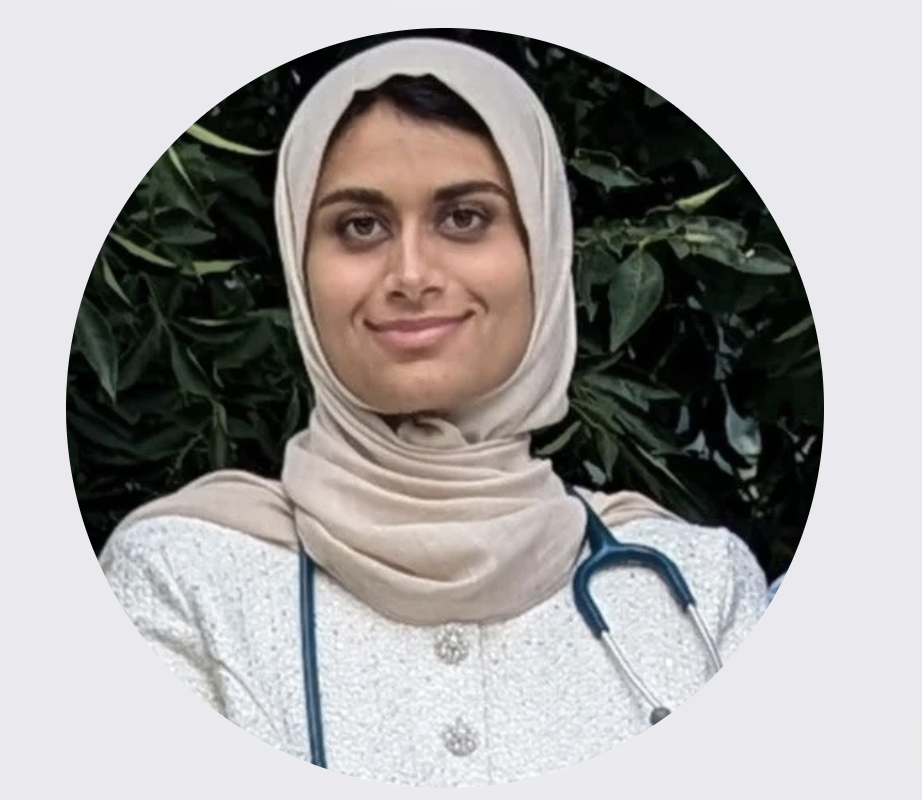
Farheen Zahra
Farheen is a medical student at the University of Calgary. Before entering medicine, she completed her BSc in Neuroscience with an Honours thesis focused on Alzheimer’s disease at the Hotchkiss Brain Institute. Her experiences span community advocacy, undergraduate research, and leadership in student organizations. Farheen has been involved in projects aimed at improving access to education and healthcare, including coordinating international collaboration through the OpenDH initiative and contributing to equity-centered programming on campus. She is passionate about making health information accessible and supporting initiatives that uplift marginalized communities. Outside of school, Farheen enjoys crocheting, reading, and spending time with friends and family.
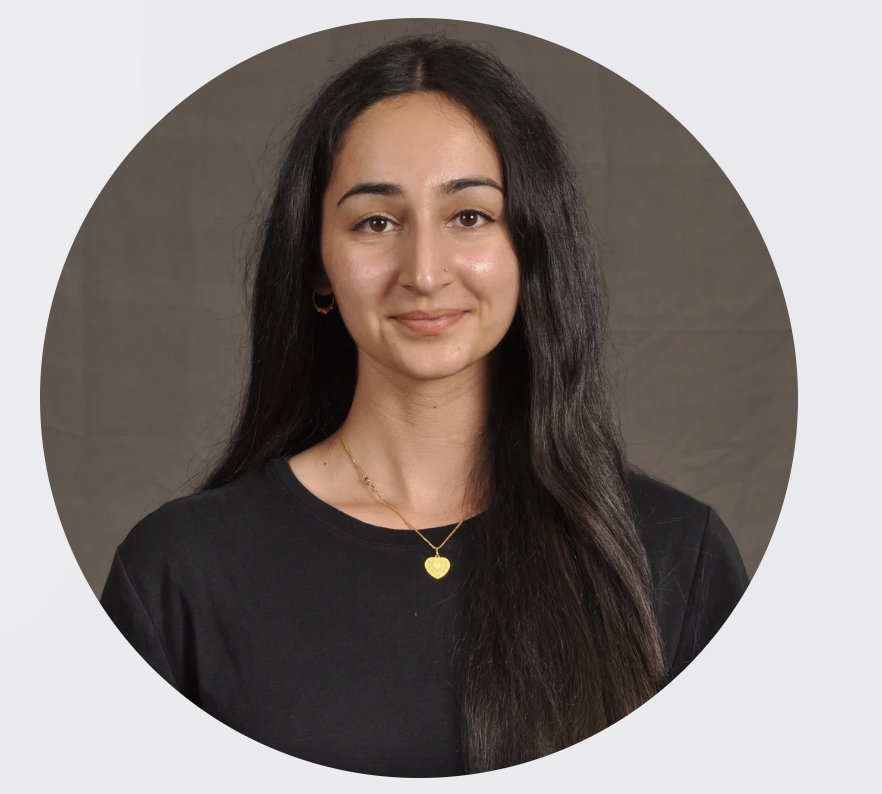
Haleema Yousuf
Haleema is a medical student at the University of Calgary. Before entering medicine, she worked with the Stroke Neurology research team at St. Michael’s Hospital in Toronto and the McMaster Pediatric Eye Research Group in Hamilton, where she developed an early interest in improving outcomes for children and families through research, innovation, and accessible care. Outside of medicine, she enjoys painting, reading, and spending time with friends and family.