
Introduction
For first-generation professionals entering medicine, nursing, and allied health professions, navigating the unwritten rules of healthcare can be a challenging and particularly isolating experience. Many enter the field without familial connections and pre-established networks to unravel the steep learning curve needed to navigate the norms, implicit values, expectations, behaviors, and social structures built into medical training. Mentorship serves as a neutralizer to this inequity. Mentors can contextualize this unfamiliar system into clear/structured pathways that can facilitate and foster professional success for their mentees. By offering a safe space for mentees to turn to, mentors can combat imposter syndrome, share highly coveted networking opportunities, and allow early-career health professionals to leverage their unique cultural backgrounds. Ultimately, consistent and fulfilling mentorship for first-generation in healthcare professionals is an important driver of equity, and the generation of heterogeneous and culturally competent leaders in medicine, which will diversify the healthcare workforce and improve health outcomes for underserved communities.
Navigating the hidden curriculum of medical education
A survey found that 67% of medical students agreed that there is a hidden curriculum more accessible to those with family members in healthcare (Ryder et al., 2022). Health professional programs have clearly outlined learning objectives, textbooks, and didactics that teach students how to gain competencies to meet professional licensing requirements. However, there are unwritten, unspoken, and unintended rules/norms that offer greater successes and career benefits to a select fraction of healthcare students with familial/personal connections in medicine. This “hidden curriculum” includes unspoken or implicit values, behaviors, or covert culture that exist in the educational and hospital setting. Students from multi-generational medical families often know these unwritten rules; prior insights into how to write/optimize their curriculum vitae, how to network with faculty, how to secure research opportunities, and so on are a select number of prior advantages that are not present to all persons. On the other hand, first generation students experience an “information-gap” and often do not know that these opportunities exist until the deadlines have passed (Fokas & Coukos, 2023). Research on first-generation and first-generation/low-income students shows that access to information and social capital is often uneven, and that students cannot find what they do not know to seek (Fokas & Coukos, 2023).
Without a mentor, one is left to learn a new language through trial and error, which forces one to rely on personal “grit” to navigate this hidden curriculum (Havemann et al., 2023). This matters because medical education involves a transition from outsider to insider status, and part of this transition is learning how to “talk the talk” in ways that are often evaluated but not explicitly taught in class/didactics (Wong et al., 2021). Mentors bridge this significant knowledge gap by acting as “cultural-translators” to help decode the hidden curriculum of healthcare for first-generation healthcare persons, allowing them to gain a greater insight into the expectations of medicine earlier in their careers (Posselt et al., 2017). Mentors are able to share their academic knowledge/insights, and their experiences with professionalism, ethics, values, and the art of medicine to these first-generation persons (Henry-Noel et al., 2019).
Healthcare programs have subjective clinical evaluations from allied clinical instructors or physicians, for first generation students the unwritten code on how to behave in a clinical setting can lead to receiving negative evaluations simply for not knowing these unwritten social norms/culture. The hidden curriculum operates through role modeling, organizational culture, and insider language and tactic expectation which can perpetuate inequalities when those expectations are not made explicit (Wong et al., 2021). A mentor can coach their protégé on how to present a case effectively, instruct them on when to speak up, and inform them of how to “read the room.” Mentors act as professional “socialization” role models teaching their students how the real world works rather than how textbooks/didactics inform them of pedagogical details and factoids. Across medicine and other health professions, role modeling and mentorship help students develop socialization skills, compare different ways of handling frustration or other challenges associated with medical education. For example, schools may teach the importance of work-life balance, but the hidden curriculum implicitly rewards overwork, as those that work harder are met with increased competence, and more accolades for their ever-important curriculum vitae. Under the guidance of a mentor navigating healthcare, the hidden curriculum can be transformed from a confusing, overwhelming, and foreign institution into a more structured and familiar pathway for first-generation in healthcare professionals (Swaminathan, 2007).
Building professional identity
Professional identity is the process by which students begin to think, act, and feel like a physician, nurse, or allied healthcare member (Boonstra et al., 2026). For firstgeneration students, this process can be more difficult because their developing professional identity must often negotiate alongside a medical culture that may not always feel welcoming or familiar (Kusner et al., 2022). Mentorship can help in building professional identity formation as it involves social and relational processes.
Mentorships can help students integrate professional values, expectations, and codes of conduct into their own sense of self (Toh et al., 2022). It can give students a clearer picture of what kind of professional they can become, which is especially important for students who do not already see people like themselves reflected in medicine or healthcare (Eggan et al., 2025).
Combatting Imposter Phenomenon
Imposter phenomenon in first-generation students can often start with feelings of selfdoubt, invisibility, not belonging, amongst others (Eggan et al., 2025). Imposter feelings can push students away from high-status specialties and select out/filtering persons well before they can be critically assessed or exposed to a field of practice (Viglianti & Iwashyna, 2022). Some first-generation students describe feeling that medicine is “above” them, or that others will eventually discover that they do not belong, even when they are performing well (Eggan et al., 2025). It can lead to feelings of indebtedness for simply being admitted, leading to the pressure of working twice as hard to prove their “worth:” culminating in cycles of overworking and burn out (Rosenthal et al.). This dynamic tension grows when the expectations are unclear and students feel conflicted between who they are and who the profession seems to expect them to be (Shaull et al., 2025). Across medical education more broadly, certain groups including women and first-generation students appear more susceptible to intense imposter feelings, although the prevalence of this negative affect is high across all persons in-training (Clark et al., 2024).
Mentorship can create psychological safety: creating an environment whereby mentees can ask questions, show vulnerability, and contribute without fear of being shamed or ignored (McClintock & Fainstad, 2022). Psychological safety is associated with belonging and a reduced concern with protecting one’s image as it relates to imposter phenomenon (McClintock & Fainstad, 2022). A mentor serves as an anchor because they validate the experiences of their mentees and provide a safe space for mentees to turn to seek feedback allowing for the development of professional confidence (Clark et al., 2024). Mentors can offer constructive feedback and share their own early-career experiences and challenges: indeed, these impactful mentors can help first-generation students realize they can feel safe to take space and thrive in medicine. Mentors coach students on how to navigate “gratitude taxes" stemming from imposter syndrome by helping them recognize when to say “no" to extra and uncompensated/unfulfilling tasks (Viglianti & Iwashyna, 2022). Simply, mentorship helps to create identity, belonging, psychological safety, and a reflective safe space which is necessary to build a strong professional identity in medicine, nursing, and allied health professions. This psychological safety net is crucial for maintaining mental resilience through the challenging demands of healthcare.
Cultivating networks, fostering equity, and fueling diversity in healthcare
Success in healthcare in the modern age is bolstered through networking - which firstgeneration individuals seldom have access to in the very early stages (as trainees or early in independent practice) of their careers (Nguyen et al., 2025). Mentors open important doors for early-career individuals by introducing them to established professionals within their spheres (Chin et al., 2026), and through the dissemination of their own invaluable insights into the rigors and expectations of a career in healthcare. These mentor-mentee connections often lead to letters of recommendation, shadowing opportunities, and early exposure to different career streams and/or clinical placements that might otherwise remain inaccessible to first-generation in healthcare persons (Chin et al., 2026). Through a mentor's inputs, inequity is curbed, while professional networks/relationships are able to blossom.
The impact of mentorship for first-generation in healthcare persons extends far beyond individual mentees’ career successes (Fraser et al., 2025). Mentorship empowers firstgeneration in healthcare professionals to bring their unique cultural perspectives and lived experiences to patient care (Sotto-Santiago et al., 2023). When a mentor invests in a first-generation person, they help to diversify healthcare and improve health equity for underserved communities (Foltz et al., 2025). Simply, mentorship catalyzes the development of heterogeneity in medicine, allowing for increased representation and varied insights at the bedside.
First-generation students should be encouraged to look for mentors, including: their fellow didactic preceptors, clinical supervisors, research professors/principal investigators, peer or non-peer programs, student organizations, and professional societies (Ortega, 2018). Students seeking mentorship can attend meet-and-greet events, join small group or peer mentoring spaces, ask faculty for brief meetings, and prepare questions about career paths, networking, or unwritten expectations (Kamalumpundi et al., 2024). It is undeniable that the learning curve is daunting in medicine, but through mentorship, increased heterogeneity and equity can be fostered and established.
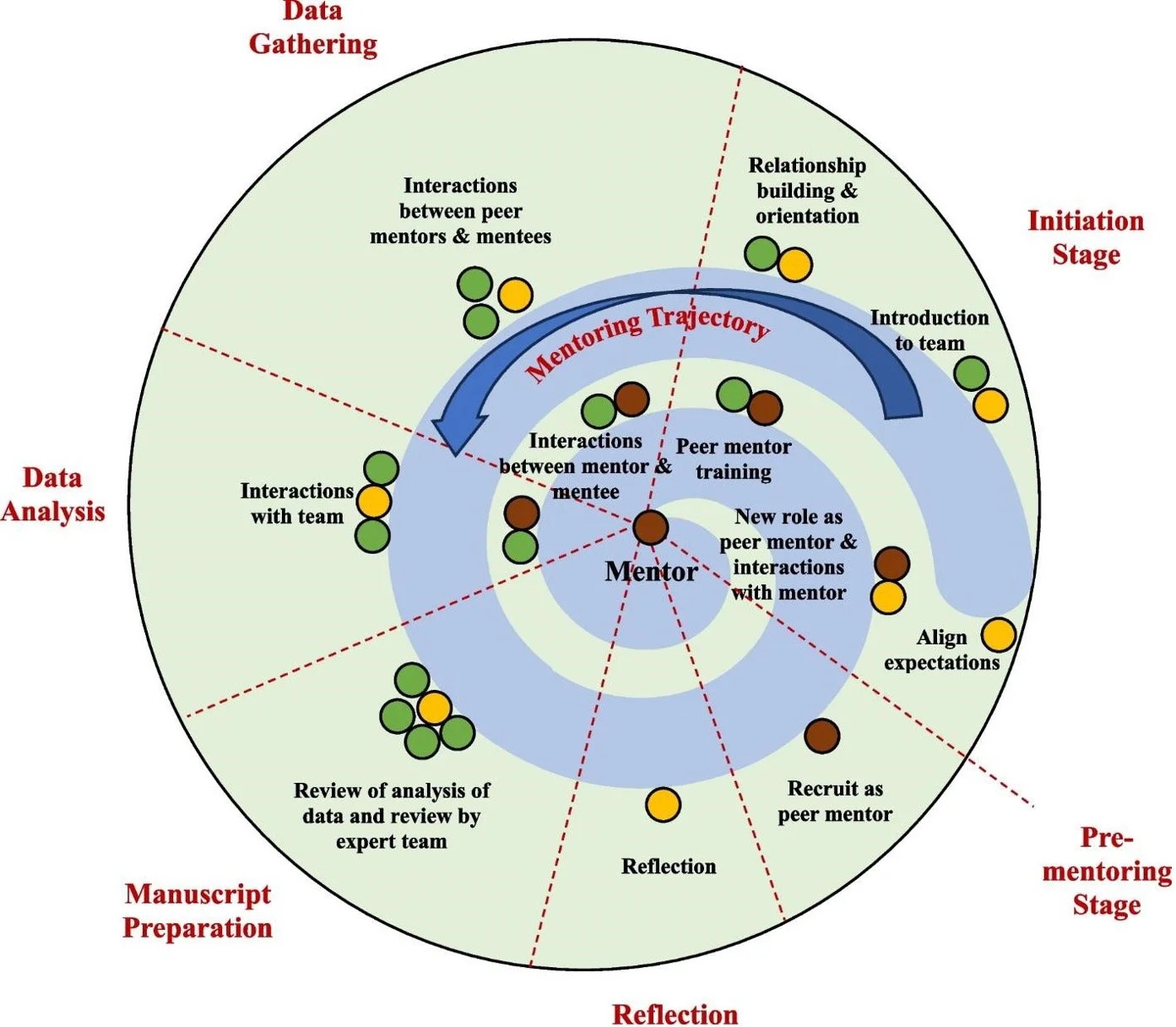
Figure 1., The academic mentor-mentee ecosystem. The green circles symbolize the mentees, light yellow circles reflect the peer-mentors, and dark brown circles represent the senior mentors. The circles represent the different persons in the mentoring ecosystem: mentees, peer-mentors, and senior mentors, and how each archetype interacts with the others to create a “mentoring trajectory” for academic success in manuscript composition (schematic obtained from (Krishna et al., 2024)).
Conclusion
Simply, mentorship serves as an important anchor for first-generation in healthcare professionals navigating the complex and unfamiliar norms/covert culture of medicine. By decoding the hidden curriculum and providing important safe spaces for mentees to turn to, mentors effectively dismantle key knowledge gaps, while actively mitigating the burdens of imposter phenomenon/syndrome. What’s more, these collaborative mentormentee relationships unlock crucial professional networks and career opportunities for first-generation mentees, fostering equity within healthcare. Ultimately, mentorship does not just advance individual careers for first-generation in healthcare persons, but it actively cultivates a diverse and culturally-heterogeneous generation of new leaders in medicine that are capable of improving health outcomes for their communities and the wide spectrum of patients that we all aim to serve.
References Cited:
Boonstra, M. D., Alsadah, H. H. H., & Bos-Veneman, N. (2026). Thriving, not surviving: a qualitative study on barriers and strengths of first-generation medical students. BMC Medical Education, 26(1), 1202. https://doi.org/10.1186/s12909-026-09620x
Chin, K. J., Rehman, U., Gohari, S. S., Mattey, L., Faulkner, L., Reyes, D. C., Sarwar, M. S., Bisset, C. N., Ellis, R., Cavale, N., Filson, S., Brennan, P. A., & Bukprc, C. (2026). The MENTOR study: a national cross-sectional study of mentorship, engagement, networking, and training opportunities in research among UK medical students and resident doctors. Postgrad Med J. https://doi.org/10.1093/postmj/qgag123
Clark, C., Clithero-Eridon, A., Crandall, C., & Ballejos, M. (2024). I’m in! So why don’t I fit in? A cross-sectional exploration of imposterism within medical school cohorts. Education for Health, 37(4), 335-343. https://doi.org/10.62694/efh.2024.148
Eggan, B., Mason, H. R. C., Chakraverty, D., Diaz, J. M., Rivera, V., L’Etoile, H., Ascencio, B., Havemann, C., Russell, R. G., Wyatt, T. R., Boatright, D., & Nguyen, M. (2025). Premedical Education Experiences of First-Generation College Graduates. JAMA Network Open, 8(12), e2549106-e2549106. https://doi.org/10.1001/jamanetworkopen.2025.49106
Fokas, J. A., & Coukos, R. (2023). Opinion & Special Articles: Examining the Hidden Curriculum of Medical School From a First-Generation Student Perspective. Neurology, 101(4), 187-190. https://doi.org/10.1212/WNL.0000000000207174
Foltz, E. A., Pursel, A. J., & Harrison, L. (2025). The Value of First-Generation College Students in Medicine: Bridging Gaps and Driving Innovation. Cureus, 17(5), e83912. https://doi.org/10.7759/cureus.83912
Fraser, K., Watson, K. H., Gonzalez, C. A., Houston, B., Saba, G. W., Cayley, W. E., Jr., & Belen, M. (2025). Underrepresented in Medicine Mentorship Program: Perceived Benefits and Lessons Learned. Fam Med, 57(3), 177-184. https://doi.org/10.22454/FamMed.2024.592893
Havemann, C., Mason, H. R. C., Russell, R. G., Casillas, A., Nguyen, M., Boatright, D., Webber, A., Parrilla, J. A., Gallegos, A., & Wyatt, T. R. (2023). Challenges Facing First-Generation College Graduates in Medical School: A Qualitative Analysis. JAMA Netw Open, 6(12), e2347528. https://doi.org/10.1001/jamanetworkopen.2023.47528
Henry-Noel, N., Bishop, M., Gwede, C. K., Petkova, E., & Szumacher, E. (2019). Mentorship in Medicine and Other Health Professions. Journal of Cancer Education, 34(4), 629-637. https://doi.org/10.1007/s13187-018-1360-6
Kamalumpundi, V., Silvers, S., Franklin, L., Neikirk, K., Spencer, E., Beasley, H. K., Wanajalla, C. N., Vue, Z., Crabtree, A., Kirabo, A., Gaddy, J. A., Damo, S. M., McReynolds, M. R., Odie, L. H., Murray, S. A., Zavala, M. E., Vazquez, A. D., & Hinton, A., Jr. (2024). Speaking up for the invisible minority: First-generation students in higher education. J Cell Physiol, 239(7), e31158. https://doi.org/10.1002/jcp.31158
Krishna, L. K. R., Hamid, N. A. B. A., Phua, G. L. G., Mason, S., Hill, R., Lim, C., Ong, S. Y. K., Ong, E. K., & Ibrahim, H. (2024). Peer mentorship and professional identity formation: an ecological systems perspective. BMC Medical Education, 24(1), 1007. https://doi.org/10.1186/s12909-024-05992-0
Kusner, J. J., Chen, J. J., Saldaña, F., & Potter, J. (2022). Aligning Student-Faculty Mentorship Expectations and Needs to Promote Professional Identity Formation in Undergraduate Medical Education. Journal of Medical Education and Curricular Development, 9, 23821205221096307. https://doi.org/10.1177/23821205221096307
McClintock, A. H., & Fainstad, T. (2022). Growth, Engagement, and Belonging in the Clinical Learning Environment: the Role of Psychological Safety and the Work Ahead. Journal of General Internal Medicine, 37(9), 2291-2296. https://doi.org/10.1007/s11606-022-07493-6
Nguyen, M., Boatright, D., & Mason, H. R. C. (2025). Reshaping Medical Education to Uplift First-Generation Medical Students. JAMA Netw Open, 8(5), e259780. https://doi.org/10.1001/jamanetworkopen.2025.9780
Ortega, K. E. (2018). Perspectives From a First-Generation College Student: Reflections on the Value of Mentoring Relationships. Health Promotion Practice, 19(4), 492-494. https://doi.org/10.1177/1524839918780685
Posselt, J., Reyes, K. A., Slay, K. E., Kamimura, A., & Porter, K. B. (2017). Equity Efforts as Boundary Work: How Symbolic and Social Boundaries Shape Access and Inclusion in Graduate Education. Teachers College Record, 119(10), 1-38. https://doi.org/10.1177/016146811711901003
Rosenthal, S., Schlussel, Y., Yaden, M. B., DeSantis, J., Trayes, K., Pohl, C., & Hojat, M. Persistent Impostor Phenomenon Is Associated With Distress in Medical Students. http://journals.stfm.org/familymedicine/2021/february/schlussel-20200024
Ryder, C. Y., Irani, S., Andreski, P., & Grob, K. (2022). 482 Evaluating the Effects and Contributing Factors to the “Hidden Curriculum” in Medical School. Journal of Clinical and Translational Science, 6(s1), 96-96. https://doi.org/10.1017/cts.2022.283
Shaull, L., Martin, P. C., Bunin, J., & Wyatt, T. R. (2025). Professionalism Policies and Practices as Experienced by First-Generation Medical Students, Residents, and Physicians. Teaching and Learning in Medicine, 37(3), 311-322. https://doi.org/10.1080/10401334.2024.2345394
Sotto-Santiago, S., Mac, J., & Genao, I. (2023). “Value my culture, value me”: a case for culturally relevant mentoring in medical education and academic medicine. BMC Medical Education, 23(1), 229. https://doi.org/10.1186/s12909-023-04148-w
Swaminathan, R. (2007). Educating for the “Real World”: The Hidden Curriculum of Community Service-Learning. Equity & Excellence in Education, 40(2), 134-143. https://doi.org/10.1080/10665680701246450
Toh, R. Q. E., Koh, K. K., Lua, J. K., Wong, R. S. M., Quah, E. L. Y., Panda, A., Ho, C. Y., Lim, N.-A., Ong, Y. T., Chua, K. Z. Y., Ng, V. W. W., Wong, S. L. C. H., Yeo, L. Y. X., See, S. Y., Teo, J. J. Y., Renganathan, Y., Chin, A. M. C., & Krishna, L. K. R. (2022). The role of mentoring, supervision, coaching, teaching and instruction on professional identity formation: a systematic scoping review. BMC Medical Education, 22(1), 531. https://doi.org/10.1186/s12909-022-03589-z
Viglianti, E. M., & Iwashyna, T. J. (2022). Mentoring First-Generation and Underrepresented in Medicine Physician-Scientists by Expanding Conversations. J Grad Med Educ, 14(2), 162-165. https://doi.org/10.4300/JGME-D-21-00920.1
Wong, B. O., Blythe, J. A., Batten, J. N., Turner, B. E., Lau, J. N., Hosamani, P., Hanks, W. F., & Magnus, D. (2021). Recognizing the Role of Language in the Hidden Curriculum of Undergraduate Medical Education: Implications for Equity in Medical Training. Academic Medicine, 96(6), 842-847. https://doi.org/10.1097/acm.0000000000003657
Asha Jama
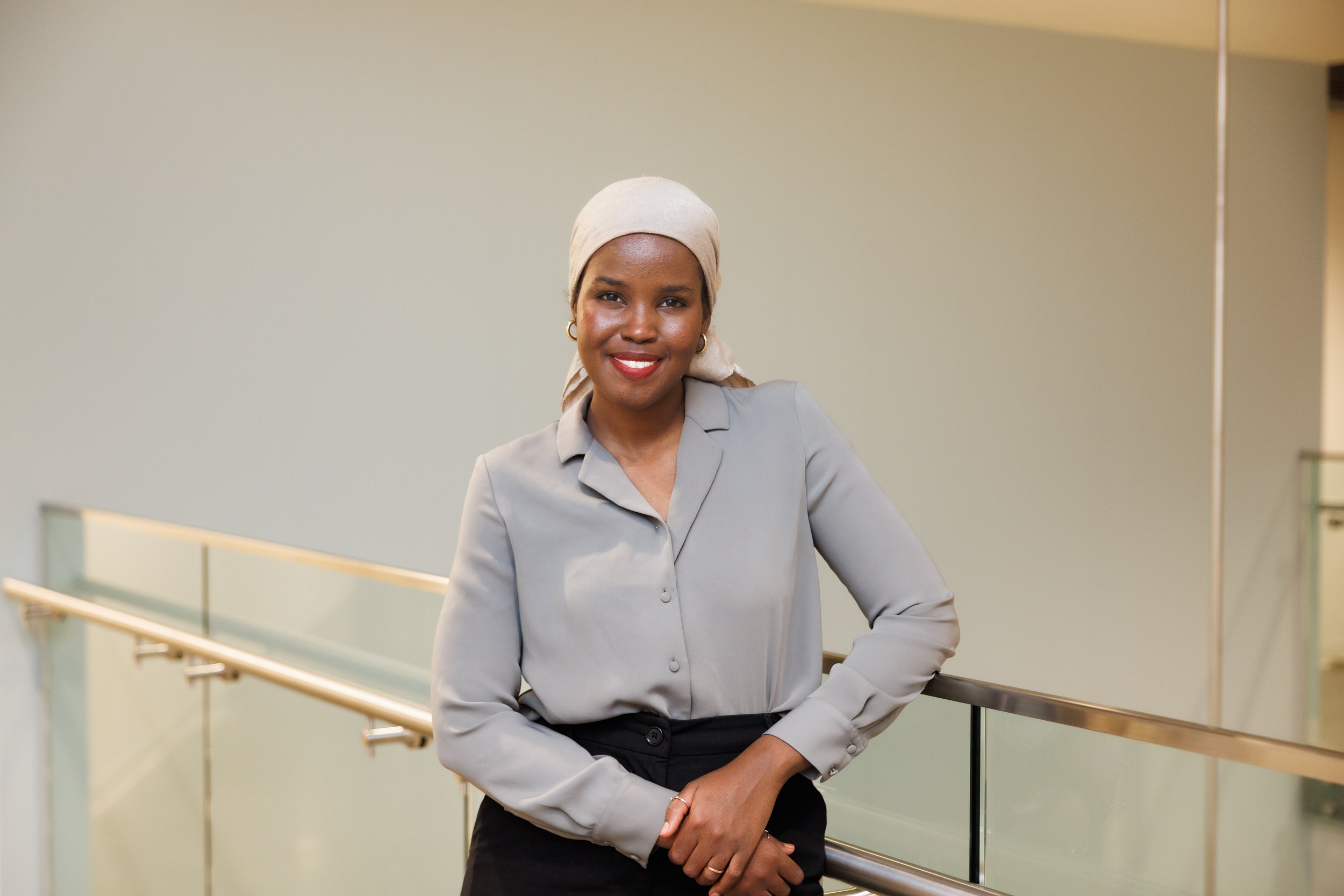
Asha Jama is a youth leader, researcher, and policy advocate studying Nursing at University of Alberta. She leads climate action programming at the United Nations Association in Canada, mobilizing hundreds of youth leaders and mentors across six provinces. Asha has represented Canada at the WFUNA Plenary Assembly in Geneva and the UN Commission on the Status of Women in New York. She was selected as a UNICEF Canada youth policy advocate presenting policy recommendations to parliamentarians. She has co-founded organizations advancing planetary health, newcomer youth leadership, and Black women’s global leadership participation, engaging thousands of youth and securing $75,000+ in micro-funding. She is the recipient of the Canadian Nurses Association’s Future of Nursing Award and $60,000+ in scholarships.
Ibrahim Khodabocus
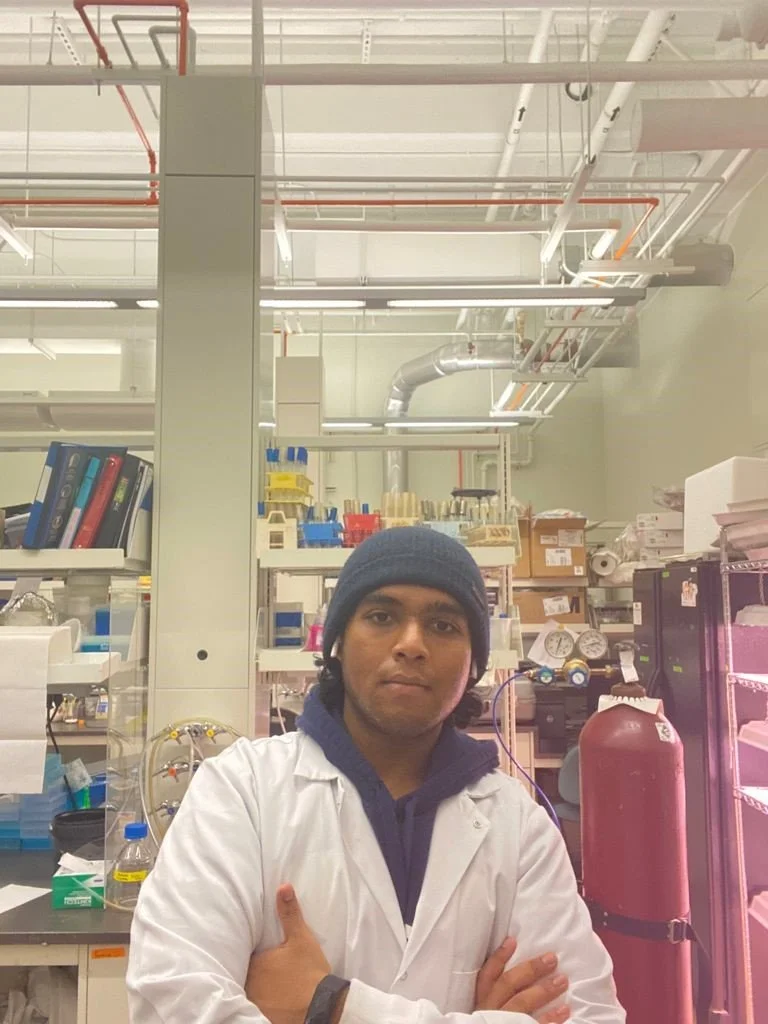
Ibrahim Khodabocus is an MD/PhD student at the University of Alberta, with aspirations of becoming a physician-scientist. He is passionate about understanding the mechanisms at play in disrupting cardiovascular homeostasis in critical care diseases, such as sepsis. Ibrahim's work spans a wide range of areas, from understanding basic biomolecular and physiological mechanisms at play in pathophysiology, to the application of medical physics and novel technologies such as functional genomics (proteomics, metabolomics) in medicine. As part of the AMA Medical Student Advocacy Committee, he hopes to bring insights into the value of impactful mentorship in fostering excellence and professional development in healthcare.