Testicular cancer is relatively rare, estimated to affect 1 in 230 Canadian males over their lifetime, yet it remains the most commonly diagnosed cancer in young men aged 15 to 35 (Public Health Agency of Canada, 2026). Transgender women and non-binary individuals assigned male at birth are also at risk, though exact incidence rates in these populations remain unknown due to gaps in national cancer registry data. While the five-year survival rate in Canada sits near 97%, catching the disease early still matters (Public Health Agency of Canada, 2026). Health literacy and timely access to primary care directly determine whether at-risk individuals know what changes to look for, feel comfortable seeking help, and receive a diagnosis before the disease progresses. This principle extends well beyond testicular health to every facet of preventative care.
Secondary prevention of testicular cancer through screening is a nuanced topic. The U.S. Preventive Services Task Force recommends against routine clinical or self-screening in asymptomatic males, citing concerns over false positives, patient anxiety, and unnecessary diagnostic procedures (USPSTF, 2011). Conversely, organizations such as Testicular Cancer Canada encourage monthly self-examinations (Testicular Cancer Canada, 2026), while the Canadian Cancer Society emphasizes knowing what is normal for your body and reporting changes promptly (Canadian Cancer Society, 2021). Advocacy groups point out that although testicular cancer is highly treatable at any stage, delayed diagnosis often requires more intensive chemotherapy or surgery, thus increasing treatment duration, healthcare costs, psychological distress, and long-term impacts on fertility and quality of life (Rovito et al., 2022; Thomas et al., 2026).
Establishing a personal baseline is therefore essential, even when formal population-wide screening is not indicated. For anyone with testicles, the best time to perform a self-examination is right after a warm bath or shower, when heat relaxes the scrotal skin and allows the testicles to hang naturally (Canadian Cancer Society, 2021; Ignite Healthwise, LLC Staff, 2025). Gently rolling each testicle between the thumb and fingers helps build familiarity with normal anatomy such as the soft, rope-like epididymis along the back of each testicle, making it much easier to recognize unusual changes like a hard, painless lump or swelling (Canadian Cancer Society, 2021; Ignite Healthwise, LLC Staff, 2025).
Body familiarity alone is not enough if patients cannot access a physician when something feels wrong. Across Canada, a persistent gender and age gap exists in primary care where only 78.9% of men report having a regular healthcare provider compared to 86.6% of women, and only 73.6% of young adults aged 18 to 34 report having one compared to 92% for Canadians aged 65 and older (Statistics Canada, 2025). In Alberta, where roughly 16% of adults lack a family physician and nearly half of those who have one cannot get a timely appointment, young people, particularly in rural communities often fall through the cracks (Alberta Medical Association, 2026). Without a trusted primary care provider, many turn to social media for health advice. The plethora of unsupported wellness claims, unregulated supplement trends, and stigma around male vulnerability online highlights the need for reliable, evidence-based guidance from trusted primary care physicians, especially for youth populations.
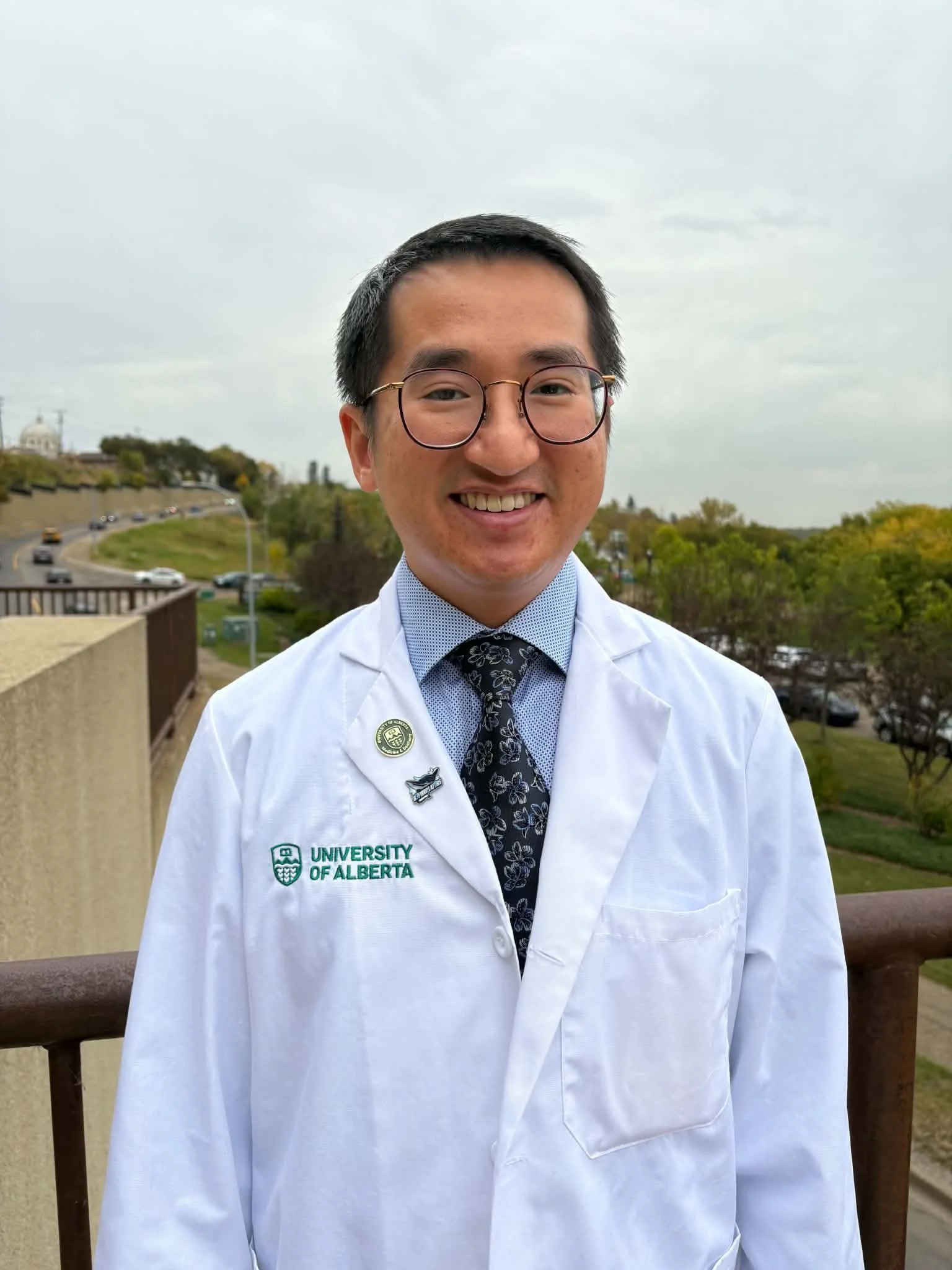
As medical students and future physicians, we are uniquely positioned to advocate and bridge some of these gaps. First is by increasing health literacy through community outreach, youth mentorship, and everyday conversations that normalize preventative health and role model inclusive, anatomy-based language. Second, we can employ harm reduction strategies and prepare to meet patients where they are, engaging openly and non-judgmentally with the social media trends, sensitive questions, and wellness myths they bring. Finally, we must continue advocating for systemic reforms that expand primary care access across both urban and rural Alberta, ensuring that when someone notices a change in their body, such as a lump on their testicle, a trusted physician is there to listen.
References:
Alberta Medical Association. (2026). State of health care 2026 report. https://www.albertadoctors.org/advocacy/strategic-priorities/system-leadership-and-partnership/state-of-health-care-2026-report/
Canadian Cancer Society. (2021, October). Finding testicular cancer early. https://cancer.ca/en/cancer-information/cancer-types/testicular/finding-cancer-early
Ignite Healthwise, LLC Staff. (2025, April 9). Testicular examination and testicular self-examination. MyHealth.Alberta.ca. https://myhealth.alberta.ca/health/tests-treatments/pages/conditions.aspx?Hwid=hw234856
Public Health Agency of Canada. (2026, October 29). Testicular cancer. Government of Canada. https://www.canada.ca/en/public-health/services/diseases/testicular-cancer.html
Rovito, M. J., Allen, K., Nangia, A., Craycraft, M., Cary, C., Lutz, M., Lyon, T., Fadich, A., Baird, B., Welch, M. G., & Alcantara, A. (2022). A call to action to review the USPSTF's recommendation for testicular self-examination. American Journal of Men's Health, 16(5), Article 15579883221130186. https://doi.org/10.1177/15579883221130186
Statistics Canada. (2025, March 11). Health of Canadians: Access to health care (Catalogue no. 82-570-X). Government of Canada. https://www150.statcan.gc.ca/n1/pub/82-570-x/2024001/section4-eng.htm
Testicular Cancer Canada. (2026). Know your normal. https://www.testicularcancer.ngo/
Thomas, K., Malvita, A., & Rovito, M. J. (2026). Assessing levels of evidence for cancer screening: A focus on testicular self-examination. Cancer Prevention Research, 19(10), 559–563. https://doi.org/10.1158/1940-6207.CAPR-26-0125
U.S. Preventive Services Task Force. (2011). Screening for testicular cancer: U.S. Preventive Services Task Force reaffirmation recommendation statement. Annals of Internal Medicine, 154(7), 483–486. https://doi.org/10.7326/0003-4819-154-7-201104050-00006